Showing posts with label Game. Show all posts

Sunday, August 17, 2014

Flaming Hockey Balls

Pelota Purépecha is hockey for pyromaniacs!  This ancient Mesoamerican version of field hockey uses a flaming ball.  Traditionally played at Purepecha (a Mesoamerica new years) around December 3.  In most places it is usually played in the streets surrounding the squares, with the flaming ball occasionally rolling under or hitting nearby parked cars.
 
The sport takes place in a marked area measuring 35 meters long and 6-8 wide, each team consists of five players armed with sticks, similar to a hockey sticks, called uarhúkua.  While often played during the day, it is predominantly a night time sport where the darkness focuses attention on the fiery sphere being hit up and down the play area ...and sometimes into the spectators.  The zapandukua is the fiery ball of about 15 cm in diameter consisting of a wooden core wrapped ​​with cotton layers and bound with rope, which is then soaked in kerosene and ignited.
 
The games duration is determined by the team captains before.  It may be based on a number of goals or on a time limit.  Traditionally players wear a team coloured bandanna, however, these days it has changed to a coloured sash like belt.  There is no sissy shin padding, gloves or flame retardant fabric.  Basic rules are: Don't be off side at the start.  No pushing other players or grabbing their stick.  Don't kick or step on the ball (or you will burn your foot).  No intentionally stopping the ball with your body (or you may set yourself on fire).
 
Recently, pelota purépecha has started making a comeback as the Mexican government is pushing to revive its ancient past times. In Mexico the Mexican Sports Confederation is printing rule books for this and other ancient games, the confederation is trying to start teams for pelota in schools nationwide. Government instructors are holding seminars to teach the game to school gym teachers and how best to dodge the fiery ball launched by excited, pyromaniac students.
 

Sunday, April 21, 2013

Mario's No Fool

Most people think Mario knocks those coins out of the blocks with his head. But Mario's no fool.  If you look closely at the animation Mario always puts his hand up so he doesn't smash his head on the blocks when he jumps.
 

Because you can't go giving yourself concussion when you have to run and jump for hours and still have staying power when you finally get to the princess.
 

Just in case you were wondering, the pipes are not a metaphor.

Have a play.


Saturday, March 23, 2013

Mario Twins

Mario Twins, music by Group X, video by Kieth McKnight.

 
Gewd Gawd.


Wednesday, March 20, 2013

Rock, Paper, Scissors

 
Rock, Paper, Scissors, it's played around the world and in more recent years the game has developed it's own official, professional circuit.

The game dates back to the Chinese Han Dynasty (206 BC – 220 AD) and was called Shoushiling (translates as hand command).  The original game consisted of Snake, Centipede & Frog, where the snake feared the poisonous centipede, the centipede feared the frog, and the frog feared the snake.


When the game reached Japan the hand sign for centipede was misinterpreted as slug or snail.  By the 17th century the hand gestures had changed to Stone, Scissors, Cloth in China (& its neighbour Korea) and to Stone, Scissors, Paper in Japan.  By the early 1920's the game had spread from Japan to Europe where it became widely popular but didn't seem to reach America until the 1930's. Some time through the 20th century the term rock replaced stone.
 
Last year researchers at the University of Tokyo developed a robot that has the capacity to beat any human challenger 100% of the time.  The robot is essentially, a camera-connected mechanical hand, driven by a supercomputer that knows how to cheat so well it is physically incapable of losing at the game.  The robot reads the shape of its human challengers hand faster than the human eye can, then translates that reading into its own pre-emptive response.
 
 
Aside from potentially losing to cheating fembots, the problem with Rock Paper Scissors is that three hand gestures give only 9 possible outcomes and a 33.33% chance of a tie.  A growingly popular variation Rock, Paper, Scissors, Lizard, Spock, adds a couple of extra hand gestures to help remedy this.  The rules of engagement are: Scissors cuts paper; Paper covers rock; Rock crushes lizard; Lizard poisons Spock; Spock smashes scissors; Scissors decapitates lizard; Lizard eats paper; Paper disproves Spock; Spock vaporises rock; Rock crushes scissors.


The addition of the extra two options gives 25 possible outcome combinations and lowers the chance of a tie to 20%.
 
But when you are trying to make a serious decisions 20% chance of a tie is still far to great.  Again the solution is to add more gestures.  Fortunately someone by the name of David Lovelace has already developed the expanded solution.  Lovelace has devised a 25 gesture game, he seems to have renamed Spock to Alien (presumably to avoid and copyright trouble) and has reverted the Lizard to Snake.


Each gesture beats out twelve gestures, and is beaten by the remaining twelve, resulting in 300 possible outcomes and only a 4% chance of a tie.

But in the age of extreme sports this is just still not enough.  What's needed is extreme rock paper scissors and fortunately Lovelace delivers again. Extreme Rock Paper Scissors consists of 101 gesture many of which are so extreme they require two hands to form.

The game is Rock, Death, Wall, Sun, Camera, Fire, Chainsaw, School, Scissors, Poison, Cage, Axe, Peace, Computer, Castle, Snake, Blood, Porcupine, Vulture, Monkey, King, Queen, Prince, Princess, Police, Woman, Baby, man, Home, Train, Car, Noise, Bicycle, Tree, Turnip, Duck, Wolf, Cat, Bird, Fish, Spider, Cockroach, Brain, Community, Cross, Money, Vampire, Sponge, Church, Butter, Book, Paper, Cloud, Airplane, Moon, Grass, Film, Toilet, Air, Planet, Guitar, Bowl, Cup, Beer, Rain, Water, TV, Rainbow, UFO, Alien, Prayer, Mountain, Satan, Dragon, Diamond, Platinum, Gold, Devil, Fence, Game, Maths, Robot, Heart, Electricity, Lightning, Medusa, Power, Laser, Nuke, Sky, Tank, Helicopter, Dynamite, Tornado, Quicksand, Pit, Chain, Gun, Law, Whip, Sword.

Each gesture beats fifty gestures and is beaten by the remaining fifty gestures. The 101 gestures results in 5,050 outcomes with only a 0.99% chance of a tie! Follow this link here to open an interactive chart showing what beats what or follow this link here for a printable friendly list describing the gestures and their descriptive spoken outcomes such as "Scissors Stabs Brain", "Robot Hurls Rock" and "Rainbow Irritates Satan".  Follow this link here and you can purchase David Lovelaces RPS-101 guidebook describing all gestures and their verbal descriptions.


Wednesday, October 31, 2012

Halloween Divination Food

There are several games traditionally associated with Halloween parties, most of which are played as forms of divination. The most well known being apple bobbing, which is called "dooking" in Scotland.  A bunch of apples float in a tub of water and the someone must remove an apple from the basin using only their teeth.  After the person has rubbed their germ filled mouth and drool all over the apples trying to get one, it's the next persons go.  If you put the apple under your pillow you are supposed to dream of your future spouse.  A more hygienic variant involves holding a fork between the teeth and trying to drop the fork into one of the apples.
 
A traditional Scottish form of divining one's future spouse is to carve an apple in one long strip, then toss the peel over one's shoulder. The peel is believed to land in the shape of the first letter of the future spouse's name.  In the early 1900s a Halloween game that was played involved walnut shells. People would write fortunes in milk on white paper and, when dry, the paper was folded and placed in walnut shells, a bit like a fortune cookie. When the shell was warmed, the milk would turn brown and the writing would appear.
 
One custom that continues in Ireland is the baking of a barmbrack (often shortened to brack), which is a light bread with raisins and used as a sort of fortune-telling game. Baked into the barnbrack is a ring, a pea, a stick, a piece of cloth, a small coin (originally a silver sixpence) and a medallion, usually of the Virgin Mary.  Commercially produced barmbracks for Halloween still include a toy ring but not a filthy rag or a dirty stick from they yard.  Each item carried a meaning for the person who received it in their slice.  The pea meant the person would not marry that year; the stick meant an unhappy marriage or constant disputes; the cloth meant bad luck or poverty; the coin meant good fortune or wealth; the ring meant they would be wed within the year; the medallion symbolised going into the priesthood or joining the nuns, however, the medallion is not widely continued today. 
 
Another similar old Irish Halloween tradition is to serve colcannon with a ring and a thimble hidden in the fluffy green-flecked dish. Prizes of small coins such as threepenny or sixpenny bits were also concealed in it.  Mush like x-mass pudding, there are probably many stories of people finding their coin by choking to death.  Colcannon is a traditional dish that is made from mashed potatoes and kale (or cabbage), with scallions, butter, salt and pepper. Occasionally it contains other ingredients like milk, cream, leeks, onions and chives.
 
Yet another fortune-telling game involved paper cut out symbols on a platter and some ice.  The paper symbols included: a dollar sign or a penny for wealth, a button for bachelorhood, a thimble for spinsterhood, a clothes pin for poverty, rice or a ring for a wedding, an umbrella for travel, a cauldron for trouble, a 4-leaf clover for good luck, and a key for fame. Someone would enter a dark room and would put their hand on a piece of ice then lay it on the platter and their "fortune" would stick to their hand.
 

Friday, October 19, 2012

Superpowered Perception

If you want to supervillan level perceptual skils and mental reflexes, video games are the way to do it. But just clicking away at simcity isn't going to cut it, you needs to be playing fast paced action first person shooters for measurable results.  Several studies in recent years have shown that action-heavy video games can dramatically improve a skill known as visual attention, the ability to pick and choose relevant visual information from a chaotic environment.  Proof that some of my misspent youth was not as misspent as it would first appear.
 
Research published in Wiley Interdisciplinary Reviews: Cognitive Science March/April 2011 showed that those who habitually play video games have been documented to outperform novices in a variety of visual attentional capabilities, including attention in space, in time, and to objects. Training studies have established similar improvements in groups of nongamers who trained using games improved their visual attention scores, leading researchers to believe that games of this sort could be used for education, workplace training, and in accident rehabilitation.  So ask your manager to make that next training workshop an inter-office Halo match.
 
A previous studey at Leiden University in 2010 showed that playing first-person shooter video games is also associated with superior mental flexibility. Compared to non-players, players of such games were found to require a significantly shorter reaction time while switching between complex tasks, possibly because they are required to develop a more responsive mindset to rapidly react to fast-moving visual and auditory stimuli, and to shift back and forth between different sub-duties.
 
 
Yep, the research is in, supercharge your visual perception skills and speed up your mental reaction time between tasks by playing the latest Doom.  Go boost your workplace skills, get on the phone to HR and tell them they should buy you a copy.
 

Sunday, July 29, 2012

Dame Huffing

Known by several names, English Draughts or American Checkers or, Israeli Damka.  Draughts is the more correct name as it drives its meaning from the verb to draw or move.  Draughts evolved from an old Middle Eastern game called Alquerque some time between the 10th and 13th century.  A Standard Draughts board is 8x8 squares.  International Draughts (also called Polish draughts or international checkers) is a variant played on a 10×10 board.  Malaysian and Canadian Draughts is on a 12x12 board for some reason.  Chinese checkers is neither a variation of checkers, nor did it originate in China.


In most non-English languages draughts is called dames or damas, or a similar term that refers to ladies. Pieces are usually called stones, or some similar term that does not imply a gender, but are called dames or ladies when crowned.  Official rules state play is on the dark squares.  If you play on the light squares, you're just doing it wrong.


One rule of long standing that has fallen out of favour is the "huffing" rule. In this variation jumping is not mandatory, but if a player does not take their jump (either deliberately or by failing to see it), the piece that could have made the jump is "blown" or "huffed", i.e. removed from the board. After huffing the offending piece, the opponent then takes their turn as normal. Huffing has been abolished by both the English Draughts Association and the American Checker Federation.


Under International Draughts rules: non-crowned pieces can also capture backward (not only forward). Crowned pieces, can move freely multiple squares in any direction (like a bishop in chess) and may jump over an opponent piece some distance away and continue moving afterwards.

Have a play.

Play Draughts free online game
Play Draughts

Friday, March 30, 2012

Impossible Flashbacks

Had a bit of minor surgery so I've been sitting at home not wanting to leave the house. Fortunately I planned ahead and picked up a couple of books and games on clearance to see me through the week of sulking. One of the games I picked up is Impossible Mission a remake of a sort of platform adventure game from 1984 that I played back then on the old Commodore 64.
The new version has identical game play to the original just with nicer graphics, it also comes with a clone of the original in all its 8bit graphical glory. I'm finding I prefer to play the crunchy graphical original version. Amid all the 80's retro montage flash backs, I came to the conclusion: It's still an awesome game.

In the game you have 6 hours to find 36 puzzle pieces in an underground, non-linear, complex of interconnected rooms and lifts, while avoiding electrified robots and holes in the floor. Every time you die you lose 10 Minuets. Different robots had different behaviours. Some are stationary, others move in patterns, and others chase the player. Some shoot electricity and others just try to crash in to you. Some have to see you first before they activate, while others know where you are all the time.

The puzzle pieces are assembled in nine groups of four, have three changeable colour variants that need to match and may need to be flipped vertically and or horizontally. Interlocking combinations of four overlap, so three pieces and significant angst may be assembled before you realise you're putting the wrong ones together.

What made it so good back then and still so good now? Partly because it was practically impossible! But mostly because of it's random nature unlike most other games on the market. The arrangement of the rooms and elevators, location of puzzle pieces, and behaviours of the robots are randomised each time you play so everything changes every time you play.

Modern games could learn a lot from an old game like this one, there's a reason for it's longevity and why it's been recoded over the years through fifteen different consoles/platforms. It's not about the pretty graphics its about the play and the challenge, quite a few too many games these days overlook that. I score it a retro 10/10.

Saturday, March 10, 2012

All The Short Words

Remember when you were a kid and you played scrabble, and you haven't got any good letter combinations so you put down words like “Um” and “Ha” but your parents would tell you it's not a real word.  Well turns out they were cheating! There's over a hundred two letter words and they are all allowed under official international scrabble tournament rules.

This is how you cheat and get away with it next scrabble match. Here's the list of all the two letter words allowed in scrabble under international rules. The (+s) shows if you can just add an “s”

AA (+s) type of Hawaiian lava
AB (+s) short for Abdominal muscle
AD (+s) short for Advertisement
AE Scottish for one (also YAE)
AG (+s) short for Agriculture
AH (+s) express surprise or joy
AI (+s) Tupian for three-toed sloth
AL (+s) East Indian shrub (also AAL)
AM exist
AN indefinite article
AR (+s) letter ‘R’
AS (+s) Norse god
AT denoting place or time
AW expressing sympathy
AX chop or cut down (also AXE)
AY (+s) affirmative vote (also AYE)
BA (+s) ancient Egyptian soul
BE (+s) exist (BES Hebrew letter)
BI (+s) short for bisexual
BO (+s) pal or buddy
BY (+s) pass to the next round (also BYE)
CH dialectic ‘I’
DA (+s) heavy Burmese knife
DE from, as used in names
DI (+s) Latin for god (also DEI) (DIS dismiss or put down)
DO (+s) musical note
EA (+s) dial river
ED (+s) short for education
EE Scottish for eye (also EEN)
EF (+s) letter ‘F’
EH (+s) say 'eh'
EL (+s) letter ‘L’
EM (+s) letter ‘M’
EN (+s) letter ‘N’
ER (+s) expressing hesitation (ERS bitter)
ES (+s) letter ‘S’ (also ESS)
ET short for eat
EX cross out
FA (+s) musical note (also FAH)
FE (+s) Hebrew letter (also FEH)
FY expressing reproach
GI (+s) martial arts uniform
GO (+s) move
GU (+s) old Shetland violin (also GUE GJU)
HA (+s) expressing surprise
HE (+s) male
HI (+s) calling attention
HM expressing hesitation (also HMM)
HO (+s) halt (also HOH HOA)
ID (+s) self
IF (+s) condition
IN (+s) gather in harvest
IO (+s) cry expressing triumph
IS exist
IT (+s) neuter of he, she, him, or her
JA German for yes
JO Scottish for loved one
KA (+s) serve (also KAE)
KI (+s) Japanese martial art spirit
KO (+s) Maori digging-stick
KY cattle
LA (+s) musical note (also LAH)
LI (+s) Chinese unit of distance
LO (+s) see or look (LOS arch expressing praise)
MA (+s) mother
ME (+s) musical note (also MI)
MI (+s) musical note (also ME)
MM expressing agreement
MO (+s) short for moment
MU (+s) Greek letter
MY belonging to me
NA (+s) Scottish no, not at all (NAS has not, or was not)
NE born with the name of
NO (+s) negative response
NU (+s) Greek letter
NY (+s) approach (also NYE NIE)
OB (+s) short for objection
OD (+s) mystical force
OE (+s) Scottish for grandchild (also OY OYE)
OF belonging to
OH (+s) express surprise
OI attracting attention
OM (+s) intoned Hindu symbol
ON (+s) go on with
OO (+s) Scot wool
OP (+s) short for operation
OR (+s) heraldic colour, gold
OS Latin for bone
OU (+s) South African for bloke
OW expressing pain
OX bovine animal, clumsy person
OY (+s) Scottish for grandchild (also OE OYE)
PA (+s) father
PE (+s) Hebrew letter (also PEH)
PI (+s) Greek letter, confuse (also PIE PYE)
PO (+s) short for chamberpot
QI (+s) Chinese physical life-force
RE (+s) musical note
SH requesting silence (also SHA SHH)
SI (+s) musical note
SO (+s) musical note (also SOH SOL)
ST requesting silence
TA (+s) expression of thanks
TE (+s) musical note (also TI)
TI (+s) musical note (also TE)
TO in the direction of
UG (+s) dread or loathe
UH expressing surprise
UM expressing doubt or hesitation (also UMM)
UN (+s) dial one
UP (+s) move up
UR expressing hesitation
US we
UT (+s) musical note
WE group that includes me
WO (+s) misery (also WOE)
XI (+s) Greek letter
XU Vietnamese money
YA you
YE (+s) arch you
YO (+s) call for attention
YU (+s) Chinese for precious jade
ZA (+s) short for pizza
ZO (+s) Tibetan yak (also DZO ZHO DZHO DSO)


See with these short words, getting rid of that difficult letter tile is now easy and you can argue your word with confidence and if they dispute your claim you can tell them to go Funk and Wagnalls.

Sunday, August 14, 2011

Invaded Space


Back in 1978 this amazing machiene appeared at the shopping centre downthe road.  It was one of the first video games and back then was the most wonderous pocket money waster around.  Created by Tomohiro Nishikado, the game caused a temporary shortage of 100-yen coins in Japan.


At the time microcomputers in Japan were not powerful enough to perform the complex tasks need so, Nishikado designed his own custom hardware and development tools to create the arcade board circuitry. Despite this, Nishikado was still unable to program the game as he wanted with colour graphics and faster movement.  While programming the game, Nishikado discovered that the processor was able to render the alien graphics faster the fewer were on screen.  Rather than change the programming to compensate for the speed increase, he decided to keep it as a challenging gameplay feature.


Tomohiro Nishikado drew his inspiration from several sources Star Wars, War of the Worlds, a Japanese mechanical board game and a dream about school children who are waiting for Santa Claus and are attacked by invading aliens.  Originally titled Space Monsters, inspired by a popular song in Japan at the time, but was changed to Space Invaders by Nishikado's superiors prior to release.

Back then in 1978, the game got its colour through plastic film stuck to the screen which would often be peeled off by vandalous youths leaving a monochrome game experience.

Here's a true to the original emulation.  Give it a play!


Monday, April 11, 2011

Legend of Zelda

One of the best tribute songs you will find anywhere, with a super tight fan made video clip.


For some reason everyone thinks the music is by System of a Down but I suspect it's actually by a couple of guys that go by the name Group X.

Tuesday, February 22, 2011

Guitarthritis

Another word from urbandictionary.com online dictionary.

Guitarthritis

The medical condition causing pain in the wrists after playing Guitar Hero for an extended amount of time.

"Man my wrists hurt from my guitarthritis."


I gave my son Guitar Hero a couple of months ago and I can confirm that excessive play results in not only guitarthritis but also causes its own form of "Tetris Syndrome".

If guitars aren't your thing, you could try Accordion Hero.

Sunday, November 21, 2010

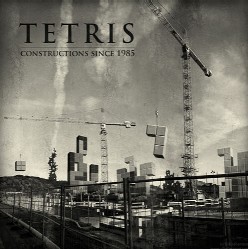
Tetяis

Tetris is the largest selling game in history, although it's profits are still exceeded by Pac-man.  It can be found on more than 60 platforms, including mobile phones, ATM machines, and handheld electronic organisers.

When someone plays Tetris for a significant amount of time it can incur upon their other thoughts, mental images and dreams and they can develop Tetris Syndrome.  People who play Tetris for a prolonged amount of time may then find themselves thinking about ways different shapes in the real world can fit together, such as buildings on a street or boxes on a shelf.  I recall having Tetris Syndrome in the late 80's.  I remember picturing what shape brick would best fit between various parked cars and between the edge of the TV screen and the News readers head!

A similar effect occurs with other computer games and can occur with any prolonged visual task (such as sorting fruit, driving long distances, etc).  It also manifests in the other senses, like that tune you can't get out of your head or sailors still walking with "sea legs" on land.  In more extreme cases people also see images of falling Tetris shapes at the edges of their visual fields or when they close their eyes, they may also have dreams involving falling Tetris shapes. 

Despite Tetris Syndrome the impact of the game on the human brain isn't all bad.  A 2009 Oxford study suggests Tetris-like video games may help with Post Traumatic Stress.  If the game is played soon after a traumatic event, the preoccupation with Tetris shapes is enough to prevent the mental recitation of traumatic images.  It specifically interferes with the way sensory memories are laid down in the period after trauma and reduces the intensity, accuracy, frequency and overall number of flashbacks that are experienced afterwards.  So keep a Gameboy in the first aid kit to treat traumatic shock.

Developed in the Soviet Union in 1985 by Alexey Pajitnov at the Computer Centre of the Russian Academy of Sciences.  Based on an ancient Roman puzzle Pentamino, the game  was called  Genetic Engineering and shaped pieces made of text characters were moved about the screen with cursor keys into spaces.  Alexey came to insist the pieces should fall from above into a well and began calling the game Tetris.  As the developed the game, Alexy and his team had trouble finishing the code as the testing process was so addictive.

At the time in the Soviet Union individuals were prohibited from engaging in private business.  Additionally, the Russian Academy of Sciences technically owned the game, since the code was written on the Academys computers.  Alexey showed Tetris game to Vladimir Pokhilko a clinical psychologist who was experimenting with the use of puzzles for psychological tests.  Vladimir instantly saw the mass appeal of the puzzle.  Alexey and Vladimir began leaking the game outside the country in an effort to bypass Soviet politics.  Tetris became the full focus of Alexey's time, and the game evolved into the full graphical version complete with sound and music based on Russian folk songs.

When the CEO of British software company Andromeda saw the game in Budapest he behaved like a 17 year old software pirate and started selling copies to companies (like Microsoft) around the world without any legal rights to the game.  When Andromedas activities were discovered by the Russian programmers they hesitated at revelling their project to their Government.  Before they decided what to do, Andromeda wired contracts for the rights to Tetris directly to the Russian Academy of Science itself, then the CEO flew to Moscow to sign the deal.  The Academy had no idea who he was or what he was talking about.  Meanwhile Tetris, already released by Spectrum and Microsoft, was causing a sensation.

In 1986 the government created a new department, Elektronorgtechnica (ELROG), The Russian Ministry for the import and export of software and took over all rights to the game.  Alexey and Vladimir considered selling the game to software companies directly, but were sure they would end up in a Soviet prison.  Over 10 years, ELROG brokered deals with Nintendo and Atari and Alexey saw none of the $40 million in royalties.  ELROG ruled that Andromeda had been selling rights to a product they never owned, however by this stage Mirrorsoft and Spectrum had already sub-licensed their rights to the game, causing their licensees to engage in legal battles around the world.  Nintendo, Tengen, Bullet-Proof Software, Blue Planet Software and Sony were in all shapes of interlocking litigation with each other, leaving the original programmers effectively blocked out.

In 1996, the ELORG restrictions in the Soviet Union expired, and Tetris rights reverted to Alexey. Together Alexey and Vladimir launched AnimaTek International.  Under the name The Tetris Company, AnimaTek claimed to hold copyright and took out trademark registrations for Tetris in almost every country in the world.  In 1998 the company began experiencing difficulties brought on by economic upheaval in Russia.  Alexey believed he would be the fall guy if he could not find capital somewhere and went on tour to see what he could drop into place.

Thinking he was unsuccessful Vladimir Pokhilko snapped.  One Monday evening at his home, he apparently took a hammer and bludgeoned his wife in the back of the head a dozen times and stabbed her in the back repeatedly with a hunting knife killing her.  He then went into his 12 year old son’s bedroom and stabbed him some 30 times while he slept.  Finally, he slit his own throat and died on the floor face-down in his son's bedroom.  He left a less than coherent suicide note which read:
"  I'VE BEEN EATEN ALIVE.
VLADIMIR.
JUST REMEMBER THAT I AM EXIST
THE DAVIL.  
"
The police investigation was brief, after discovering the note all the pieces fell into place.

In a cruel twist of fate, representatives from the Japanese computer giant Squaresoft, unaware of the deaths, showed up Wednesday in AnimaTek's offices. They were ready to wire $200,000 to AnimaTek's accounts for the next day.  Since then The Tetris Company has sent cease and desist letters to web sites that misused the Tetris trademark as well as to Google insisting that 35 Tetris-clones be removed from the Android Market.


But if you want to get more involved in the game, you can try First Person Tetris and experience the game from the tetrominos perspective.